






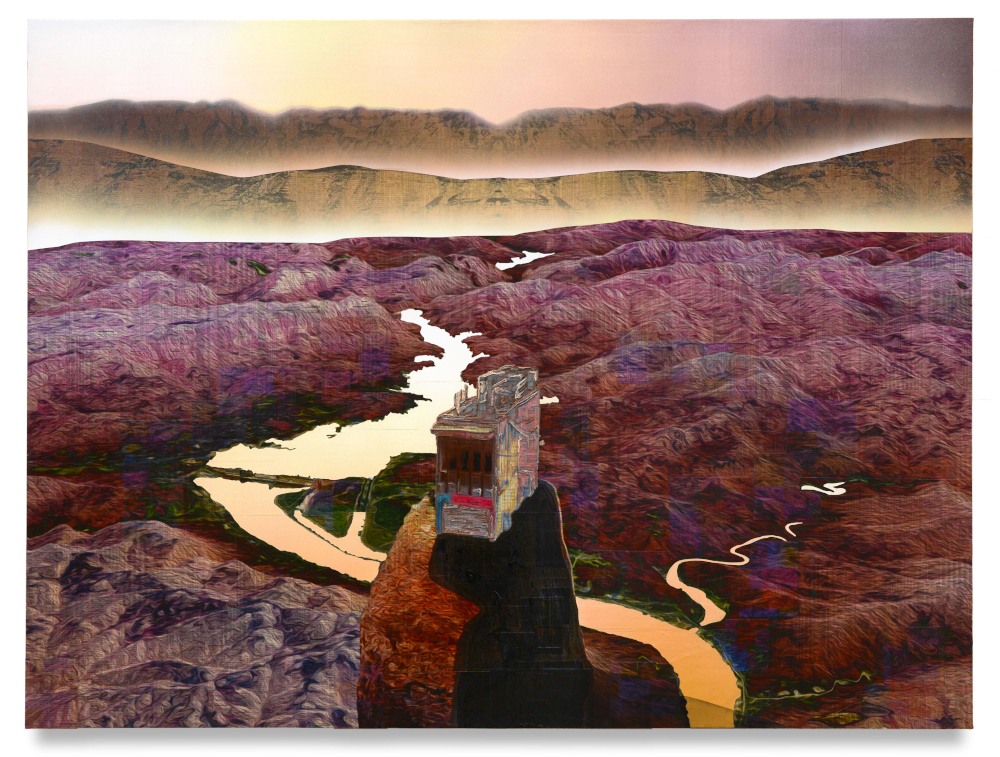
In his latest exhibition, Many Worlds, One Mind, the London-based multimedia artist uses pixel-sorting algorithms and financial data to unmask the fragile scaffolding of global capitalism.
The digital screen and the oil canvas have more in common than we think. Both are windows into engineered realities, and both have served as status symbols for the ruling classes of their respective eras. For contemporary multimedia artist Gordon Cheung, this parallel is not just a theory—it is the raw material for his practice.
In the exhibition Many Worlds, One Mind, hosted by CLOSE Gallery, Cheung dismantles classical art history to expose the modern machinery of global finance. Born in London to Hong Kong parents, Cheung’s unique intercultural perspective allows him to move fluidly between Eastern traditions, Western art history, and bleeding-edge technological innovation. The result is a body of work that questions who truly architectures our contemporary life.
From Tulip Mania to Tech Monopolies
At the heart of the exhibition is Cheung’s acclaimed New Order series. Works like Jan van Huysum I (New Order) (2014) and New Order Still Life with Flowers and a Watch begin as high-resolution Rijksmuseum photographs of Dutch Golden Age still life paintings. Cheung then subjects these digital files to a custom algorithm that re-orders their pixels.
The visual effect is striking: the pristine, opulent floral arrangements—originally painted to celebrate 17th-century wealth—appear to melt, glitch, and slide down the surface. By digitally bleeding these images, Cheung draws a straight line from the Dutch Golden Age (the era of the world’s first recorded economic bubble, ‘Tulip Mania’) to the volatile digital markets of today. It is a haunting commentary on fragile mortality, futile materialism, and history’s stubborn habit of repeating itself.
Sculpting the Datascape
Cheung’s critique of global capitalism becomes literal in his breathtaking 2023 sculpture, Passages of Time. Standing over two meters tall, the piece is constructed from Financial Times newspaper, wood glue, and polystyrene on a thermoplastic polymer base.
The form itself draws inspiration from traditional Chinese “scholar’s rocks” or “spirit stones”—naturally occurring, eroded rocks prized by Chinese literati for meditation. Yet, instead of stone shaped by water and time, Cheung’s rock is built from the literal text of stock market listings. It presents a world formed entirely by datascapes, shaped by the light-speed movements of capital. The sculpture hangs in a tense balance, teetering precariously between a technological utopia and a dystopian collapse.
The Architect of the In-Between
What makes Many Worlds, One Mind so compelling is how Cheung weaves his “in-between” identity into the technical execution of the art. He seamlessly blends 3D printing and digitally mediated surfaces with classical painting sensibilities.
The setting for this confrontation between history and data is intentionally curated. Hosted by CLOSE, a gallery nestled within the Somerset landscape, the exhibition benefits from a slower, more meditative rhythm. Far from the frenetic pace of a metropolitan art fair, CLOSE provides a deliberate, quiet space for viewers to sit with Cheung’s complex works—a physical counterpoint to the dizzying speed of the digital markets he critiques.
As data and imagination collide, Cheung’s work forces us to ask a critical question: are we controlling the systems that shape our world, or are they controlling us?
Exhibition Information
- Exhibition Title: Many Worlds, One Mind
- Artist: Gordon Cheung
- Dates: 6 June – 15 August 2026
- Venue: CLOSE Gallery, Close House, Hatch Beauchamp, Taunton, Somerset, TA3 6AE
- Gallery Opening Hours: * Thursday & Friday: 11:00 AM – 4:00 PM
- Saturday: 11:00 AM – 3:00 PM
- Visits outside of these hours are welcome by appointment.
- Admission & Contact: For appointments or inquiries, email info@closeltd.com or call +44 (0)7712 109 172.
- Website: closeltd.com